It runs in the browser
A script tag and a canvas. WebGL 2 is all it needs, on a phone or a computer. No engine to install, no plugin, and no video stream to keep alive.
Wireface vs MetaHuman
MetaHuman is Epic's tool for the most realistic digital humans you can author, for films, games and virtual production in Unreal Engine. Wireface is built for the web and for conversation: one portrait becomes a head that talks, blinks and looks at your visitor, in any browser, with nothing to install. Choose by where your character has to live.
Not affiliated with Epic Games. See the notes on this comparison.
At a glance
They overlap only in that both make a digital face. Almost everything else, from where they run to what they cost to serve, comes from what each was built to do.
| Topic | Wireface | MetaHuman |
|---|---|---|
| Made for | Talking faces on the web: websites, chat widgets, kiosks, apps and three.js games. | Cinematic and game-quality digital humans: film, games and virtual production. |
| Where it runs | Any modern browser (WebGL 2) on a phone or a computer, and in apps and three.js scenes. The visitor's own device draws it. | Unreal Engine, and other engines once you bring the character into them. In a web page, only as video streamed from a server running the engine. |
| What you need | Whatever opens the page. | For authoring, Epic recommends at least 16 physical cores, 32 GB of RAM and a graphics card of RTX 3070 class with 8 GB of video memory. |
| Making a character | One portrait photo. | Presets and sliders in MetaHuman Creator, or a scan or footage of a real person, with more hands-on work. |
| Realism | Photographic and convincing on a web page, fitted to the person in the photo. Not scan-grade. | The benchmark: scan-based faces, strand hair, detailed skin, eyes and teeth. |
| Animation | Live lip-sync from audio, expressions, eye contact and natural behaviour, driven by code or a voice agent. | Performance capture turned into high-fidelity facial animation (MetaHuman Animator), plus Unreal's full animation toolset. |
| Body and clothes | Head, neck and shoulders, with a choice of tops. | A full body, clothing and hair grooms. |
| Cost to use | Free under the Personal Licence for personal and commercial use on your own site; paid licences for products you sell. See licensing. | Covered by Unreal Engine's licence: free below US$1 million a year in revenue, standard Unreal terms above that. |
| Cost to serve | Static files. A thousand visitors cost the same to serve as one. | On the web, server graphics capacity that grows with the number of people watching at once. |
Why Wireface
If your character has to live in a web page and talk to people, these are the things that matter, and they are what Wireface is built around.
A script tag and a canvas. WebGL 2 is all it needs, on a phone or a computer. No engine to install, no plugin, and no video stream to keep alive.
A head is about 0.75 MB and the engine about 350 KB, both compressed. On the Heads page a head is talking about two seconds after the page opens, on a fast connection.
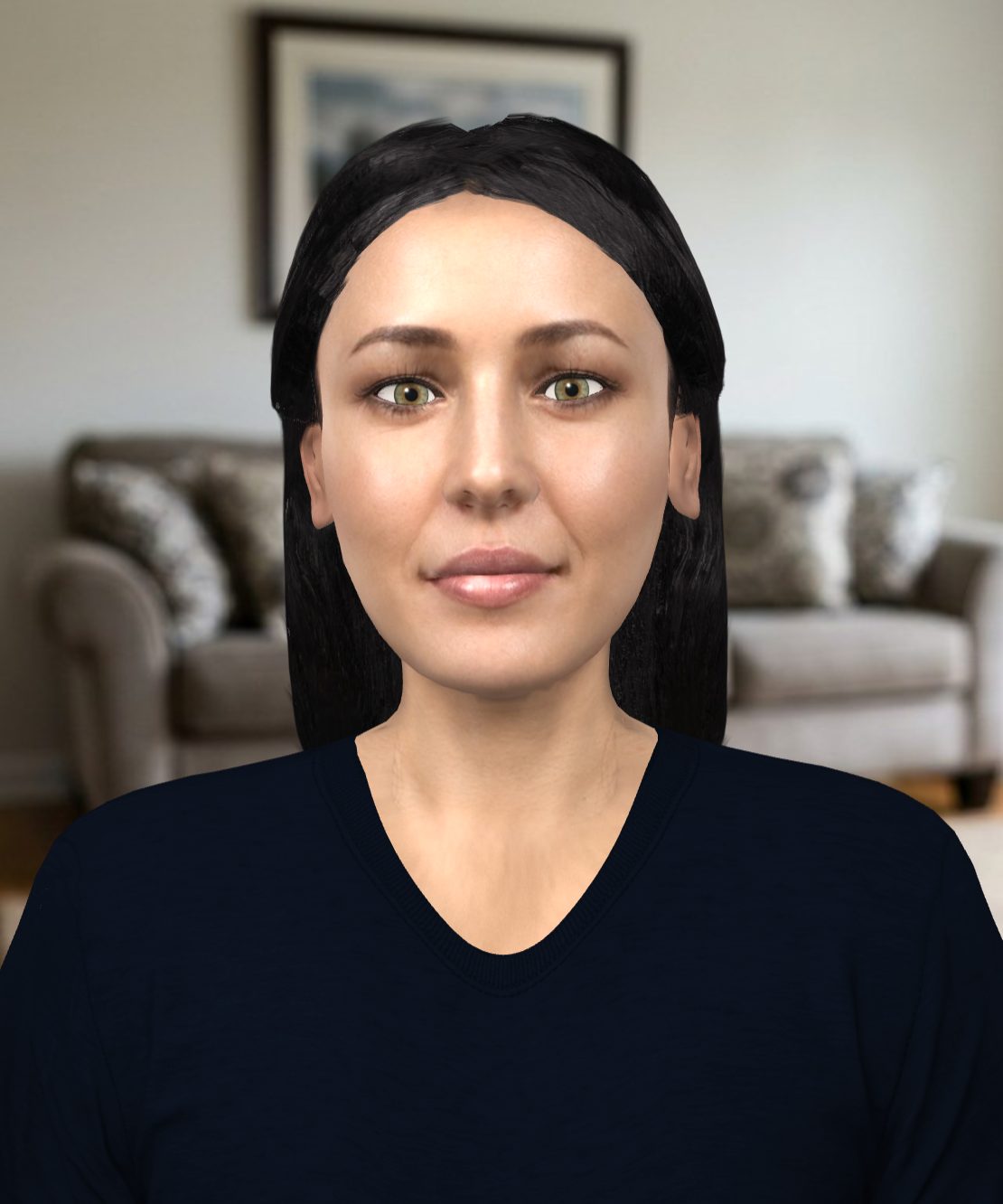
A head with ears, neck, shoulders and hair that turns all the way round is made from a single photo. No scanning rig and no sculpting.
Lip-sync from audio, expressions, and a head that behaves like a person sitting there: it settles, tilts, blinks and glances away and back. It pairs with Wireface Chat and voice agents.
Each visitor's own device does the drawing, so there are no graphics servers to run and no cost per viewer. Your site serves a few static files.
An SDK for the web, a three.js package for games and 3D, and one licence that is free for personal and commercial use on your own site.
Which one
Wireface is not the tool for a feature film's hero character, and MetaHuman is not the tool for a support widget that has to load on a phone. They can sit in the same company: MetaHuman for the trailer, Wireface for the website's host.
Questions
See it for real
Eight people, live in your browser. Turn them round, change their clothes and the room, and hear them talk.
MetaHuman and Unreal Engine are trademarks of Epic Games, Inc. Wireface is not affiliated with or endorsed by Epic Games. This comparison is based on Epic's published documentation (for example its hardware requirements) and reporting on its licence terms, as of October 2026. Terms and features change, so check Epic's own pages before you decide.